
How to Choose the Best Round Elastic Cord in 2026?

Choosing the best Round Elastic Cord in 2026 starts with the job it must do. A cord for a soft fabric mask needs a different balance of stretch and comfort than one used to secure a bundle or close a gear pouch. Look beyond color and price. Check diameter, material, stretch range, recovery, and how the ends will be attached. Small differences matter. A cord that feels springy in your hand may loosen after repeated pulls, or feel rough against skin.

As [Verified Expert Name], a specialist in elastic cord materials, puts it: “[Insert a verified quotation about matching cord stretch, recovery, and use.]” Confirm the expert’s name, credentials, and exact wording before publication; an unverified quotation weakens buyer confidence. In practical terms, compare samples under the conditions they will face. Pull each cord to the same length, release it, and check whether it returns evenly. Then inspect the braided cover for fraying or uneven thickness.

This guide explains how to assess those details and select a Round Elastic Cord for your project. It also considers durability, comfort, sourcing, and value. No single cord is best for every use. That can be easy to overlook. A slightly thicker option may last longer, but it can also feel bulky or resist small fittings. Use the recommendations as a starting point, and test a short sample before ordering in quantity.
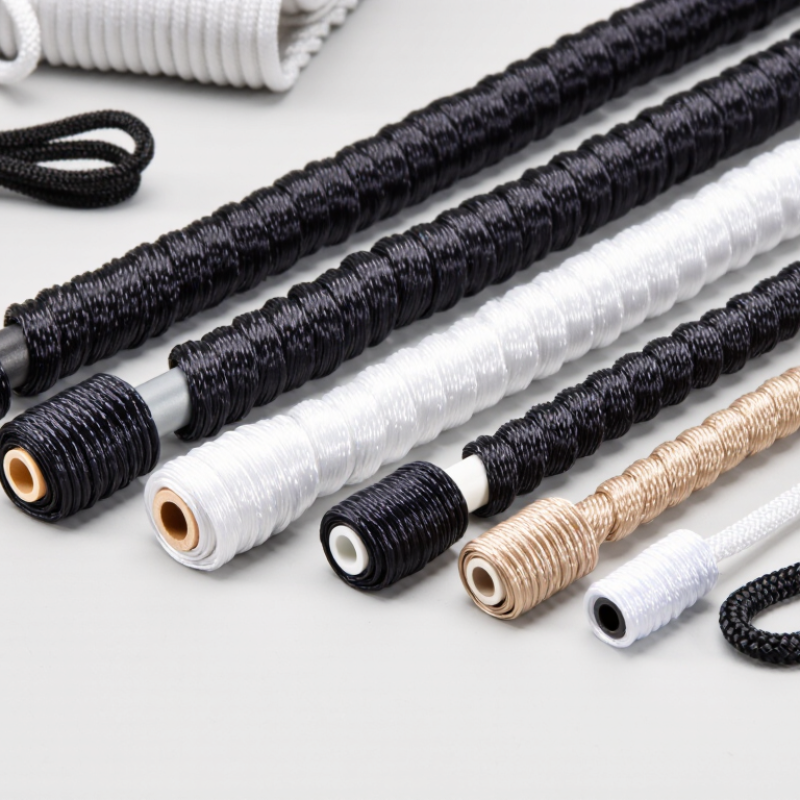
How to Choose the Best Round Elastic Cord in 2026?

What Is Round Elastic Cord and How Is It Made?

Round elastic cord is a stretchable cord with a circular cross-section. Its core supplies most of the stretch, while an outer textile covering helps protect it and creates a finished surface. Unlike flat elastic, it can sit neatly in a channel, hood, or drawstring opening. It is often used in garment details, crafts, and light-duty outdoor gear. Small differences matter.

Most round elastic cord is made by gathering elastic strands into a central core, then braiding or weaving yarn around them. The core may use natural rubber or a synthetic elastic material; the covering is commonly polyester or nylon. During production, manufacturers control braid density, cord diameter, and tension. The finished cord may be checked for stretch, recovery, and surface consistency. A sample can reveal more than a label.

For selection, check the actual diameter and how far the cord stretches before it feels strained. Pull a short sample, release it, and look for prompt recovery without a loose or wavy covering. Also consider whether the cord will rub against skin, fabric, or a rough edge. Material descriptions alone do not guarantee identical performance. There is no single best cord for every use, and I would test it in the intended channel before ordering a large quantity.

Which Materials and Construction Types Are Available?

Round elastic cord usually pairs a stretchy core with a protective outer sheath. The core is commonly natural rubber or synthetic elastomer, while polyester, nylon, or polypropylene form the covering. Natural rubber often feels lively and recovers well, but heat, sunlight, and oils may shorten its service life. Synthetic cores can offer more consistent performance, though the exact blend matters.

The sheath changes how the cord handles wear. Polyester resists moisture and sunlight reasonably well, making it a practical choice for outdoor use. Nylon is tough against abrasion, but it can absorb water and feel heavier when wet. Polypropylene is lightweight and sheds water, yet may not tolerate heat as well. Check the core. A neat, even braid can help contain the strands and reduce surface wear.

Construction matters as much as fiber. A tightly braided cover typically supports repeated stretching and helps the cord keep a round profile. Knitted or looser covers may feel softer and bend easily, but can snag sooner in rough contact. Feel the difference. Then compare the cord’s stated diameter, stretch range, and recovery after repeated pulls. Product descriptions do not always show how a cord behaves after months of use, so test a short sample under the conditions it will face. That extra check may seem fussy, but choosing by color or diameter alone can miss the real trade-off.

How to Choose the Best Round Elastic Cord in 2026? — Available Materials and Construction Types
Cord Option Typical Materials Construction Key Characteristics Common Uses What to Check Before Buying
General-purpose covered cord Rubber or elastomer core with a polyester yarn covering Continuous covering yarns braided around a round elastic core Polyester is widely used for its strength, abrasion resistance, and relatively low moisture absorption. The cover helps protect the core and provides a textile surface. Garment components, crafts, drawstrings, and general light-duty fastening Confirm cord diameter, stretch and recovery requirements, cover tightness, and whether the cord is intended for repeated tension.
Soft-hand covered cord Rubber or elastomer core with cotton covering yarn Braided textile cover over a round elastic core Cotton has a familiar, soft feel and absorbs more moisture than polyester. It may show wear or lose appearance sooner under abrasion or frequent washing. Soft-touch apparel details, accessories, and craft projects Check care instructions, colorfastness, and whether the intended use exposes the cord to moisture or heavy abrasion.
Smooth, durable covered cord Rubber or elastomer core with nylon (polyamide) covering yarn Braided cover around a round core Nylon is strong and abrasion-resistant, and can provide a smooth cover. Its properties and performance vary by yarn specification and finish. Accessories, equipment loops, and applications involving rubbing or handling Ask about yarn type, diameter tolerance, colorfastness, and suitability for exposure to sunlight or chemicals.
Latex-core elastic cord Natural rubber latex core, typically with a polyester, nylon, or cotton cover One or more elastic core strands enclosed by a braided cover Natural latex provides elasticity but can be affected by aging, heat, oils, and prolonged ultraviolet exposure. Latex may trigger allergic reactions in some people. General textile elastic applications where natural-rubber elasticity is acceptable Check for latex disclosure, core composition, storage guidance, and the required stretch and recovery. Choose a latex-free alternative when needed.
Synthetic-elastomer-core cord Synthetic elastomer core with a polyester, nylon, or other textile cover Covered round cord; core formulation depends on the product May be selected where a natural-latex-free core is required. “Synthetic elastomer” does not define one universal performance level; heat, chemical, and aging resistance depend on the formulation. Latex-sensitive environments and applications with specified material requirements Request the exact core material and test data rather than assuming all synthetic cores have the same properties.
Bare or minimally covered elastic cord Exposed rubber or elastomer strands, sometimes with a light textile covering Single or multiple elastic strands, with little or no protective braid Can offer a compact profile, but an exposed core may be more vulnerable to abrasion, snagging, and surface damage than a fully covered cord. Enclosed assemblies, internal components, or uses where the cord is protected from rubbing Check whether the cord will contact sharp edges, skin, or rough surfaces, and whether a protective cover is necessary.
Braided construction Usually a rubber or elastomer core surrounded by interlaced textile yarns Cover yarns cross over one another around the core A common construction for round elastic cord. The braid helps contain and protect the core; stretch and feel depend on braid coverage, yarns, and core design. Drawcords, craft cord, apparel, and general-purpose elastic assemblies Inspect braid coverage and uniformity, and test the finished cord at its intended working extension.
Knitted construction Textile yarns formed into loops around or alongside an elastic element Looped knit structure; availability and design vary by supplier Can provide a flexible textile surface. It may behave differently from a braided cord, so the construction should be confirmed for the intended application. Soft textile applications and products requiring a flexible covered surface Ask for a construction sample and test stretch, recovery, surface stability, and resistance to snagging.
Woven or tape-style elastic Elastic yarn or core combined with woven textile yarns Interlaced woven structure, usually flat or ribbon-like rather than round Woven elastic is commonly supplied as flat tape; it should not be assumed to be equivalent to round elastic cord. Waistbands, straps, and other applications suited to flat elastic If a round profile is essential, verify the cross-section and product construction before ordering.

How Do You Match Cord Properties to Your Intended Use?

How to Choose the Best Round Elastic Cord in 2026?

How Do You Match Cord Properties to Your Intended Use?

Start with the job, not the cord’s appearance. A narrow cord may suit a lightweight drawstring, while a thicker one can provide more holding force for bundled gear. Check the stated diameter and stretch range, then compare them with the space available and the tension required. Fit matters more. If the cord will sit outdoors, look for details about UV and moisture resistance; a soft fabric cover alone does not guarantee durability.

For repeated pulling, recovery matters as much as stretch. A cord that stays elongated after several cycles may loosen a cover or bundle. When possible, test a short sample under the same conditions you expect in use. Pull it to the working length, release it, and check whether it returns evenly. Also inspect the sheath for snagging against rough edges. I’d still allow extra margin: real-world wear can be messier than a quick test.

Tips: Measure the route and knot or fitting before ordering. Compare cords at the same extension, not just by diameter. For anything supporting people or heavy loads, choose a purpose-rated product and follow its limits; ordinary elastic cord is not a substitute for safety equipment. Test it first.

Which Specifications Matter When Comparing Round Elastic Cords?

When comparing round elastic cords, begin with diameter and tolerance, not color. A cord listed as 3 mm may bind in a narrow channel if its actual diameter varies. Check core and jacket materials: latex-based cores often stretch readily, while synthetic elastomers may suit different aging or temperature needs. Ask for material data, not a vague “heavy-duty” label. Fit matters. Inspect braid coverage and surface finish; exposed core can snag on a sharp eyelet.

Compare force at a stated elongation, maximum elongation, and recovery after repeated stretching. These figures help only when test conditions are clear. A high stretch percentage alone does not mean the cord will hold your load comfortably. Match working tension to the actual use, leaving a margin for knots, wear, and changing conditions. Test it. Stretch a sample through several cycles, then check whether it returns near its original length or stays slack.

For outdoor use, ask how sunlight, water, and temperature affect performance. Supplier data helps, but a small trial in your own channel can reveal friction or fit problems. I would not choose from a catalog number alone; batch variation can matter.

How Can You Test, Choose, and Care for the Right Cord?

Round elastic cord can look similar on a spool, yet diameter, core construction, and sheath affect how it behaves. Match its working stretch and recovery to the job, not just its color. For a drawstring, a soft sheath may feel better against fabric; for outdoor gear, check documented resistance to sunlight and moisture. Review load guidance, since “strong” alone is not a useful specification.

Test a sample before buying a full length. Measure it relaxed, then stretch it gradually to the length expected in use. Release it and see whether it returns close to its starting size. Repeat several times and inspect for thinning, snags, or exposed core. Keep the test modest. Pulling until it nearly snaps says little about comfortable daily use. A kitchen scale can help compare samples under the same load, though it is not a certified strength test.

Care affects performance. Rinse away grit or salt with clean water, then air-dry the cord away from direct heat. Avoid sharp edges and tight knots that pinch the sheath. Store it loosely coiled, not stretched around a hook for months. Replace cord that stays elongated, feels brittle, or shows broken fibers. A soft hand can be misleading; recovery under real conditions deserves attention, too.