
How to Choose the Best Toiletry Bag Supplier in 2026?
Choosing the best Toiltry Bag supplier in 2026 requires more than comparing catalog prices. The right partner should understand materials, packing habits, production limits, and customer expectations. A beautiful sample means little if the zipper fails after repeated use. Small details matter. Inspect stitching, lining, pull strength, odor, and water resistance under practical conditions.
Travel-accessories sourcing consultant Martin Köhler says, “A dependable supplier proves quality through repeatable production, not one impressive sample.” His point deserves attention. Ask for factory photographs, material specifications, inspection records, and recent production references. Confirm whether the supplier can maintain the same dimensions across different batches. A two-millimeter change can affect hotel storage, retail packaging, and customer satisfaction.
Experience also exposes uncomfortable gaps. Some suppliers respond quickly but avoid precise answers. Others offer low prices while quietly reducing lining thickness. These warning signs should not be ignored. Request a pre-production sample and test it with bottles, brushes, cables, and cosmetics. Check whether the seams bulge when the compartment is full. Test the zipper with one hand. It sounds minor. It is not.
A reliable supplier should communicate clearly about lead times, packaging, customization, defect handling, and sustainable material claims. Certifications deserve verification, rather than automatic trust. Product safety and ethical manufacturing should remain non-negotiable. The cheapest quote may become the most expensive decision after returns, delays, or damaged brand reputation. This guide examines the practical questions buyers should ask before selecting a Toiltry Bag supplier for the changing 2026 market.
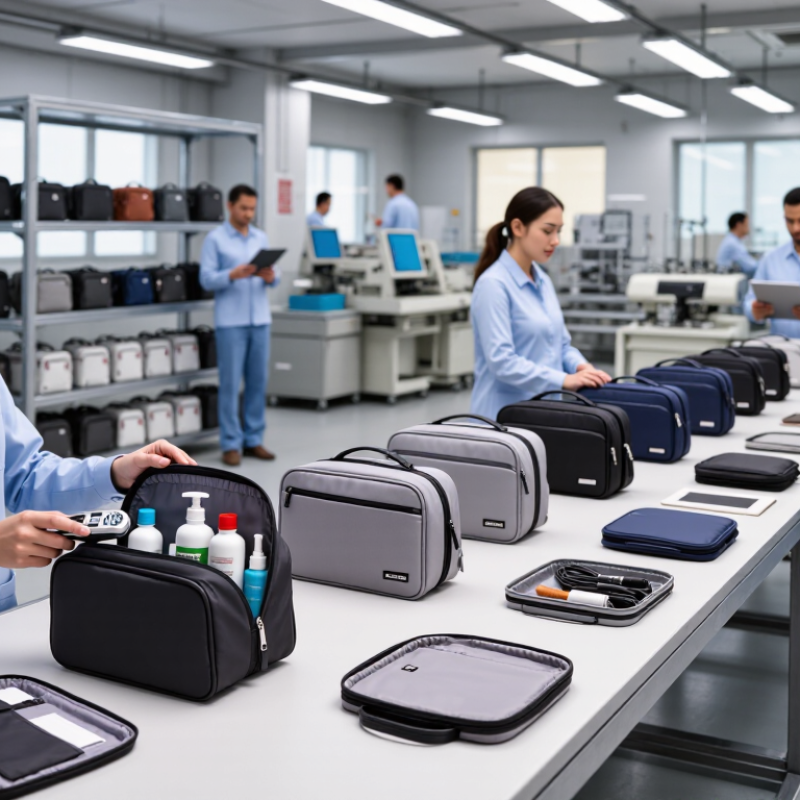
Define Your Toiletry Bag Requirements and Target Market
Choosing a toiletry bag supplier in 2026 starts with a precise product brief. Define the user before discussing price or minimum order quantities. A frequent traveler may need a slim, water-resistant case with secure zippers. A family buyer may prefer larger compartments, washable lining, and bright visibility. For gym users, quick access and easy-clean materials may matter more than decoration. Write down dimensions, capacity, closure type, lining, handle strength, and packaging needs. Include acceptable color variation and stitching tolerance. Small details prevent costly revisions.
Your target market should shape the supplier search. Study its spending level, buying occasions, age range, and preferred sales channels. A premium audience may expect reinforced seams, smooth hardware, and refined materials. A value-focused audience may accept fewer pockets if the bag remains durable and easy to clean. Ask suppliers for material specifications, sample photos, production timelines, and quality-control records. Request a physical sample before approving bulk production. Photos can hide weak seams. Verify every claim.
From practical sourcing work, I have learned that attractive samples sometimes conceal awkward storage. Test the bag with actual bottles, a comb, and travel-size containers. Check whether the zipper opens smoothly with wet hands. Measure unused space. It reveals design waste. Compare supplier communication, revision discipline, and response speed. These signals often predict reliability better than a low quotation. Still, a detailed brief cannot remove every uncertainty. Consumer preferences change, and my assumptions may be wrong. Leave room for controlled testing and honest feedback.
This 100-point sourcing scorecard helps buyers define toiletry bag requirements before comparing suppliers. Product quality and compliance receive the highest weights, while target-market fit, cost, customization, lead time, and sustainability support the final supplier decision.
Compare Supplier Materials, Designs, and Customization Options
How to Choose the Best Toiletry Bag Supplier in 2026?
Material selection reveals a supplier’s practical experience. Recycled polyester feels light, resists moisture, and suits frequent travel. Nylon usually offers stronger abrasion resistance, especially around corners and handles. Cotton canvas looks warmer but may absorb spills without proper coating. EVA creates a firm, wipe-clean shell, although it can feel less flexible. Ask for fabric weight, lining details, zipper testing, and water-resistance results. A sample tells more than a polished catalog.
Design should match real routines. A useful bag needs separate pockets for bottles, brushes, and small accessories. Elastic loops can stop containers from rolling during transit. A hanging hook saves space in compact bathrooms. Double stitching matters at the handle base. Check whether the zipper opens smoothly with one hand.
I once preferred a beautiful narrow design, but it held too little for daily use. Appearance can mislead.
Customization goes beyond adding a printed logo. Suppliers may offer custom colors, woven labels, pullers, linings, embroidery, and retail packaging. Confirm color consistency across production batches. Request a pre-production sample before approving large quantities. Also compare minimum order quantities, sample fees, lead times, and inspection procedures. Reliable suppliers explain limitations clearly. Some cannot reproduce complex artwork on textured fabric. That is not always a weakness, but it requires honest planning. Evaluate communication, documentation, and corrective support after sampling.
Evaluate Manufacturing Quality, Certifications, and Production Capacity
How to Choose the Best Toiletry Bag Supplier in 2026?
A dependable supplier should prove manufacturing quality, not merely promise it. Ask for production samples, stitching specifications, zipper test results, and fabric composition records. Inspect stress points around handles and seams. A neat sample can still conceal inconsistent bulk production. Request inspection photos from several production stages, including cutting, sewing, trimming, and packing. Quality checkpoints should be documented, repeatable, and assigned to trained staff.
Certifications can support credibility, but they require careful checking. Verify certificate numbers, issuing organizations, validity dates, and covered production sites. ISO 9001 may indicate a structured quality system, while ISO 14001 reflects environmental management practices. Material-related certificates should match the actual fabric and accessories used. Social compliance audits can provide useful evidence, though one audit cannot describe every working condition. I have found that suppliers sometimes present certificates without explaining their scope. That deserves a closer question.
Tips: Request a recent factory audit, monthly capacity figures, and peak-season lead times. Compare stated output with machinery, worker numbers, and previous orders. Ask how defects are recorded and corrected. Do not confuse a large workshop with reliable capacity. A smaller facility may offer stronger control, but its backup plans could be limited. Test a pilot order before committing to full production, and review the results honestly. Convenience can hide risk.
Review Pricing, Minimum Orders, Lead Times, and Shipping Terms
How to Choose the Best Toiletry Bag Supplier in 2026?
A low unit price can hide expensive details. Ask for a written quote covering samples, custom artwork, packaging, inspections, and payment terms. Compare prices at several order quantities, such as 500, 1,000, and 5,000 pieces. A supplier with a higher price may offer stronger zippers, cleaner stitching, and better quality control. Request material samples before approving production. Small differences matter.
Minimum order quantities should match your sales forecast, not the supplier’s preferred volume. Ask whether colors, linings, and printed labels have separate minimums. A flexible supplier may permit mixed colors within one order. That can reduce unsold inventory. However, smaller orders often increase the unit cost. The balance is not always obvious.
Lead times need careful measurement. Separate sample development, approval, production, inspection, and shipping time. For example, production may take 25 days, while ocean delivery adds another 30 to 45 days. Build a buffer for revisions and holiday closures. I have seen schedules fail because approval emails were treated as production dates. That assumption is risky.
Shipping terms deserve equal attention. Confirm whether the quote uses EXW, FOB, or another agreed term, and identify the exact delivery point. Check freight charges, cargo insurance, import duties, carton dimensions, and required documents. Ask for a realistic shipment schedule, not a hopeful estimate. A perfect product arriving late still creates problems.
Verify Supplier Reliability Through Samples, Audits, and Contracts
How to Choose the Best Toiletry Bag Supplier in 2026?
Choosing a toiletry bag supplier in 2026 requires more than a polished catalog. Reliability appears in small details: sample stitching, zipper movement, lining quality, and response time. Request samples made from the materials and specifications you will actually order. Inspect seams after repeated opening, packing, and light washing. A beautiful prototype can hide weak production habits. Ask for revision samples when measurements or pockets change. It costs time.
An audit should examine more than factory appearance. Review production records, quality checkpoints, worker training, equipment maintenance, and corrective-action reports. If possible, use an independent auditor and compare findings with supplier documents. Verify capacity during busy seasons, because promises often sound strongest before deadlines. Speak with the quality manager, not only the sales contact. Ask for evidence, not confident explanations. A minor defect is not always disqualifying. Repeated defects without a clear fix are different. I have seen buyers overlook this distinction. It later created avoidable delays. No checklist catches everything.
Tips: Put every important promise into the contract. Define materials, dimensions, color tolerance, inspection standards, packaging, delivery dates, and remedies for defects. Include approval procedures for sample changes. Do not accept vague phrases like “premium quality.” Use measurable language. Request written records for every approved adjustment. A clear contract will not replace judgment, but it exposes weak commitments early.
How to Choose the Best Toiletry Bag Supplier in 2026? — Verify Supplier Reliability Through Samples, Audits, and Contracts
| Evaluation Dimension | Evidence to Request | Recommended Benchmark | Verification Method | Risk Signal | Suggested Weight |
|---|---|---|---|---|---|
| Business Identity and Legal Status | Valid business registration, operating address, authorized contact, export documentation, and bank-account consistency. | All legal names, addresses, payment details, and contract entities match exactly. | Check official registration records where available; confirm the factory address by video call or an independent visit. | The quotation, bank account, and contract use different legal entities without a documented explanation. | 10% |
| Sample Quality and Functionality | Pre-production sample, final material specification, zipper and hardware details, dimensions, logo artwork, and packaging sample. | The approved sample matches the signed specification for materials, dimensions, construction, color, and function. | Use a signed sample approval sheet with dated photographs and a controlled revision number. | The supplier refuses to record material composition, tolerances, or approved sample changes. | 20% |
| Sample Lead Time | Sample request date, payment date, dispatch date, and delivery record. | Target a clearly documented sample schedule, commonly 7–15 working days for standard toiletry bags; custom materials may require longer. | Compare promised dates with courier tracking and the actual approval timeline. | Dates are given verbally only, or delays are blamed on unspecified production issues. | 8% |
| Material Safety and Compliance | Material composition, restricted-substance declarations, test reports where required, and packaging specifications. | Materials comply with the destination market’s applicable chemical, labeling, and product-safety requirements. | Confirm that test reports identify the actual material or production batch; use an accredited laboratory when risk or regulation requires it. | Reports are expired, generic, edited, or issued for a different material and supplier. | 15% |
| Quality Management System | Quality manual, inspection procedures, defect classification, calibration records, corrective-action reports, and relevant certifications. | Documented incoming, in-process, and final inspections with traceable corrective actions; ISO 9001 certification is useful but does not replace product inspection. | Review controlled procedures and select several completed inspection records for consistency. | Only a certificate is provided, with no inspection records or measurable acceptance criteria. | 15% |
| Independent Factory Audit | Audit report covering labor practices, production capacity, quality controls, traceability, environmental controls, and subcontracting. | No critical nonconformities; major findings have named owners, deadlines, and documented closure evidence. | Use an independent third-party audit or conduct an on-site audit before placing a large order. | The supplier controls the audit scope, blocks production-area access, or cannot close repeated findings. | 15% |
| Production Capacity and Subcontracting | Monthly capacity, current utilization, equipment list, staffing plan, production calendar, and approved subcontractor list. | Available capacity covers the order quantity and peak-season plan without relying on undisclosed subcontractors. | Compare stated capacity with equipment, staffing, recent orders, and an actual production schedule. | The supplier cannot identify where cutting, sewing, printing, packing, or storage will occur. | 8% |
| Pre-Shipment Inspection and AQL | Inspection checklist, sampling plan, defect definitions, inspection report, carton details, and shipment release procedure. | Use a mutually agreed sampling standard such as ANSI/ASQ Z1.4; define lot size, inspection level, AQL values, and critical, major, and minor defects in writing. | Require an inspection report before shipment and retain random samples, photos, and carton counts. | The supplier uses “100% checked” without records or rejects quality claims based on undefined defect standards. | 12% |
| Contract and Specification Control | Purchase contract, technical specification, approved sample reference, tolerance table, packaging requirements, delivery terms, and change-control procedure. | The contract defines product requirements, acceptance criteria, inspection rights, delivery obligations, remedies, confidentiality, and dispute resolution. | Ensure every attachment is dated, numbered, signed, and referenced in the purchase order. | The supplier requests production based only on informal messages or an incomplete quotation. | 15% |
| Payment and Commercial Protection | Pro forma invoice, payment schedule, refund or replacement terms, tooling ownership, and agreed Incoterms® 2020 rule. | Use milestone payments linked to sample approval, production completion, inspection, and shipment; document the named place for the selected Incoterms® rule. | Match the invoice, contract, purchase order, and bank details before every payment. | The supplier demands urgent payment to a new account or refuses written remedies for nonconforming goods. | 10% |
| Delivery Reliability | Confirmed production schedule, historical on-time records, shipping documents, carton count, and contingency plan. | Set a measurable shipment date and require advance notice for material, capacity, or logistics risks. | Track actual shipment dates against confirmed dates across multiple orders, not just one transaction. | The supplier repeatedly changes the ship date after receiving the balance payment. | 12% |
| After-Sales Response and Corrective Action | Complaint process, response-time commitment, replacement or credit policy, root-cause analysis, and corrective-action format. | Written acknowledgement within 1 business day and a documented corrective-action plan for verified defects. | Test the process with a formal quality inquiry before the first bulk order. | Issues are handled only through informal chat, with no owner, deadline, or preventive action. | 10% |