10 Tips for Choosing the Right Bag Manufacturer?
Choosing the right Bag Manufacturer is a commercial decision, not merely a search for the lowest unit price. The factory you select affects material quality, production stability, delivery timing, worker welfare, and your brand’s credibility. A polished sample can hide weak stitching, unclear subcontracting, or inconsistent hardware. Look closer.
The McKinsey State of Fashion reports continue to identify supply-chain resilience, traceability, and cost pressure as major industry priorities. Textile Exchange’s Materials Market Report 2024 also reports that polyester remains the dominant global fiber, while recycled inputs still represent a limited share. These findings matter when comparing canvas, leather alternatives, recycled polyester, and packaging choices. A responsible Bag Manufacturer should explain material sources, testing procedures, factory ownership, and corrective-action processes with evidence.
Francesca Romana Rinaldi, a responsible-fashion researcher and author, has described traceability as “the backbone of responsible fashion.” Her point is practical. Ask for records, not promises.
Small details matter.
Can the supplier match thread color across batches? Can it control seam strength near a loaded handle? Does it photograph finished goods before shipment? The perfect manufacturer may not exist. I have seen buyers overvalue attractive samples and undervalue communication speed. That mistake becomes expensive when orders grow.
This guide, “10 Tips for Choosing the Right Bag Manufacturer,” examines capacity, quality systems, ethical sourcing, minimum order quantities, pricing, sampling, communication, and production transparency. It also considers an uncomfortable question: is the supplier genuinely reliable, or simply persuasive during the sales process?
Define Bag Specifications: Materials, Capacity, Function, and Target Cost
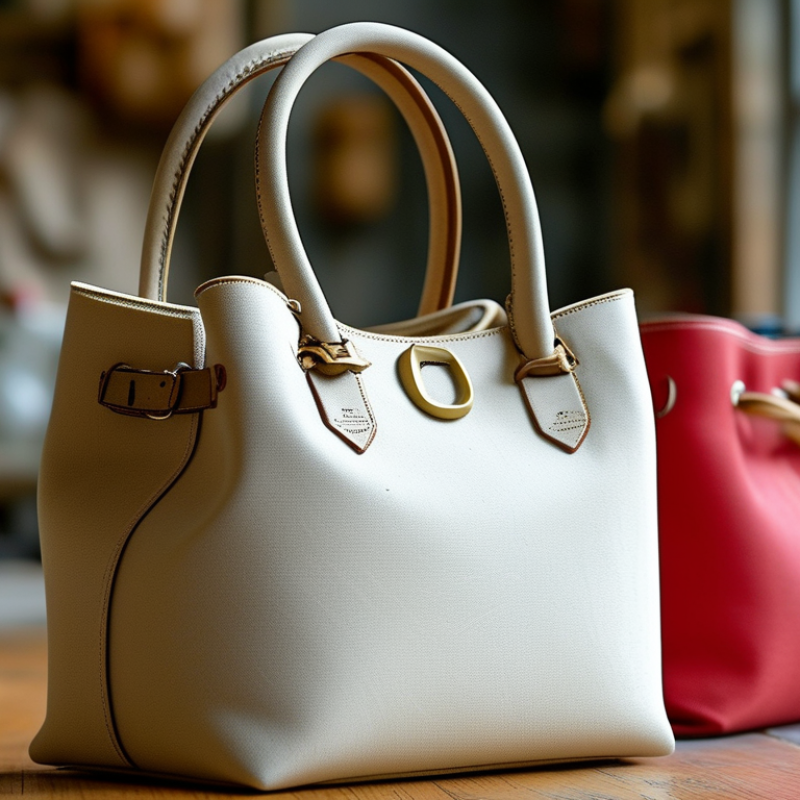
Before contacting a bag manufacturer, turn the product idea into measurable specifications. Start with the material: recycled polyester, cotton canvas, nylon, or coated fabric. Each choice affects weight, abrasion resistance, water behavior, and unit cost. Ask for fabric weight, weave, finish, and test results. “Durable” is too vague. Use numbers instead.
Capacity should match real use, not just a visual sample. Measure the items users carry, then allow room for movement and closure. A commuter bag may need space for a laptop, charger, bottle, and light jacket. Record internal dimensions, pocket sizes, handle drop, and maximum loading weight. Function also includes zippers, seams, lining, padding, and cleaning requirements. Request a prototype and inspect it with ordinary contents. Empty bags can look excellent. Full bags reveal weak points. I once underestimated seam stress around a loaded side pocket, which forced a costly revision. That mistake taught me to test before approving production.
Set a target cost before sampling, but separate product cost from packaging, shipping, inspection, and tooling. Give the manufacturer an acceptable range, not an unrealistic promise. Compare quotations against identical specifications. A lower price may hide thinner fabric, fewer reinforcement stitches, or reduced testing. Ask which features can change without harming daily performance. Keep the specification sheet dated and clear. Suppliers may interpret “large capacity” differently. Leave room for improvement; early estimates are rarely perfect. Recheck the budget after the prototype, especially when hardware or custom finishes change.
Screen Factories Using ISO 9001:2015 Certification and Audit Records
10 Tips for Choosing the Right Bag Manufacturer
Tip 1: Ask for the current ISO 9001:2015 certificate before discussing large orders. Check the factory name, address, certification scope, issue date, and expiry date. The scope should cover bag manufacturing, not only office management. Verify the certification body through an independent accreditation directory. A copied PDF is not enough. Look for controlled document numbers and matching company details.
Tip 2: Request recent audit records, including nonconformity reports and corrective action evidence. Strong factories can explain what failed, why it failed, and how recurrence was prevented. Review records for fabric inspection, cutting accuracy, stitching strength, packing checks, and shipment release. Ask to see closure dates and responsible departments. Specific evidence matters more than polished presentations. Sometimes, factories hide minor problems. That is a warning sign.
Tip 3: Compare audit findings with production samples and factory observations. A documented process should appear on the workshop floor. Check whether operators use approved patterns, inspection forms, and traceable material labels. Speak with the quality manager, not only the sales representative. Ask how rejected bags are isolated and recorded. ISO certification supports consistency, but it does not guarantee perfect workmanship.
My evaluation checklist is useful, but it is not flawless. I still revisit decisions after receiving pilot samples. Inspectors can miss details, especially during busy production periods. Therefore, combine certification review, audit history, sample testing, and an on-site visit before confirming capacity. Keep written records of every answer. Clear records protect both quality expectations and future communication.
10 Tips for Choosing the Right Bag Manufacturer
Screening Factories Using ISO 9001:2015 Certification and Audit Records
This 100-point screening model prioritizes operational control, risk-based planning, performance evaluation, corrective action, and documented evidence. Buyers can use these categories to compare factories consistently and verify that an ISO 9001:2015 certificate is supported by current audit records and traceable quality processes.
Compare MOQs, Lead Times, Capacity, and Pricing Across 3–5 Suppliers
10 Tips for Choosing the Right Bag Manufacturer
When comparing three to five bag manufacturers, begin with measurable facts, not polished presentations. Request the MOQ, sample cost, production lead time, monthly capacity, and complete pricing structure. A supplier quoting 500 units may suit a small launch better than one requiring 5,000. Ask whether the MOQ applies per design, color, or total order. This detail changes the real cost quickly. I once underestimated packaging and inspection fees, which weakened an otherwise attractive quote.
Tips: Build a comparison sheet with identical specifications. Record fabric weight, zipper type, printing method, packaging, payment terms, and shipping assumptions. Then compare unit prices at several quantities, such as 500, 1,000, and 5,000 pieces. The cheapest quote can hide longer lead times or limited capacity. Request a production calendar, not only a verbal promise. A factory producing near full capacity may delay your order during seasonal demand. Leave a buffer of two weeks.
Tips: Check capability through samples and clear evidence. Review stitching consistency, seam strength, dimensions, and color accuracy under natural light. Ask who manages quality checks and when inspections occur. A supplier with strong capacity is not automatically suitable for complex construction. I have learned that a technically impressive sample can still reveal communication gaps during revisions. Test response speed, documentation, and willingness to correct mistakes. Reliable cooperation matters as much as the final price. Never compare numbers without comparing assumptions.
10 Tips for Choosing the Right Bag Manufacturer? — Compare MOQs, Lead Times, Capacity, and Pricing Across 5 Suppliers
Comparison basis: indicative supplier quotations for 1,000 custom 600D polyester duffel bags, approximately 40 × 25 × 20 cm, one standard color, individual polybag packing, FOB pricing, and standard export packaging.
| Evaluation Dimension | Supplier A | Supplier B | Supplier C | Supplier D | Supplier E |
|---|---|---|---|---|---|
| 1. Minimum Order Quantity (MOQ)Confirm whether the MOQ applies per color, style, or total order. | 500 pcs | 1,000 pcs | 300 pcs | 2,000 pcs | 800 pcs |
| 2. Sample Lead TimeTime for one standard pre-production sample after artwork approval. | 7–10 days | 10–14 days | 5–7 days | 12–15 days | 7–12 days |
| 3. Bulk Production Lead TimeExcludes material delays, holidays, inspection, and ocean transit. | 25–30 days | 30–35 days | 20–25 days | 35–45 days | 28–32 days |
| 4. Monthly Production CapacityEstimated capacity for similar soft luggage and bag styles. | 80,000 pcs | 150,000 pcs | 45,000 pcs | 250,000 pcs | 100,000 pcs |
| 5. Indicative Unit PricingFOB estimate at 1,000 pcs; final price depends on specifications and materials. | US$4.85 | US$4.55 | US$5.20 | US$4.30 | US$4.70 |
| 6. Sample and Tooling ChargesStandard sample fee; excludes major mold or custom hardware development. | US$45 sample; tooling at cost | US$60 sample; tooling at cost | US$35 sample; tooling at cost | US$75 sample; tooling at cost | US$50 sample; tooling at cost |
| 7. Quality-Control ProcessVerify whether inspections occur during production and before shipment. | In-line and final inspection | In-line, final, and carton inspection | Final inspection; third-party inspection accepted | In-line, final, and AQL-based inspection | In-line and final inspection |
| 8. Material and Customization RangeCheck fabric weight, lining, trims, printing, embroidery, and recycled options. | Polyester, nylon, canvas; printing and embroidery | Polyester, nylon, RPET; printing and woven labels | Polyester and canvas; basic customization | Polyester, nylon, RPET; extensive trim options | Polyester, nylon, canvas; printing and embroidery |
| 9. Payment TermsNegotiate milestone payments and confirm the balance-before-shipment requirement. | 30% deposit; 70% before shipment | 30% deposit; 70% before shipment | 40% deposit; 60% before shipment | 30% deposit; 70% before shipment | 30% deposit; 70% before shipment |
| 10. Compliance and DocumentationRequest test reports, material declarations, packing lists, and inspection records. | REACH support; commercial invoice and packing list | REACH and CPSIA support; test reports available on request | Basic material documentation; third-party testing available | REACH, CPSIA, and ISO 9001 documentation support | REACH support; material and packing documentation |
Verify Materials Against REACH Requirements and OEKO-TEX Testing Standards
Choosing the right bag manufacturer requires more than checking stitching and delivery prices. Materials must be verified against REACH requirements before production begins. Ask for current declarations covering fabric, coatings, zippers, buckles, printing inks, adhesives, and packaging. Every component matters. A compliant outer fabric cannot offset restricted substances in a metal trim.
The European Environment Agency reported in 2024 that EU textile consumption used about 270 kilograms of raw materials, 9 cubic meters of water, and created a 270-kilogram carbon footprint per person in 2020. These figures make material selection a measurable sourcing decision, not a paperwork exercise. Request laboratory reports linked to the exact material, color, and production batch. OEKO-TEX STANDARD 100 testing can help screen finished components for harmful substances, but certificates must be checked for scope, validity, and product class.
A certificate is not permanent proof. Formulas can change.
A reliable manufacturer should explain its testing process clearly and provide traceable records. Confirm whether testing covers azo dyes, heavy metals, formaldehyde, plasticizers, and other restricted substances relevant to the bag’s construction. REACH compliance should be reviewed against the latest applicable requirements, including Candidate List updates from the European Chemicals Agency. I have seen sourcing teams accept generic reports too quickly; that shortcut creates uncertainty. A stronger review compares the report date, laboratory details, material composition, and purchase order specifications before bulk production starts.
Control Samples and Production Quality With AQL 2.5 Inspections
10 Tips for Choosing the Right Bag Manufacturer
Control Samples and Production Quality With AQL 2.5 Inspections
A reliable bag manufacturer should accept clear control samples before production begins. These samples define fabric color, stitching density, zipper movement, logo placement, lining, and dimensions. Keep an approved sample with signed notes and dated photographs. Small differences can become expensive when hundreds of bags arrive. In my experience, verbal approval is too weak. Details get forgotten.
Tips: Ask the manufacturer to confirm the inspection standard, lot size, inspection level, and AQL 2.5 acceptance numbers. AQL 2.5 usually focuses on major and minor defects under a recognized sampling plan, such as ISO 2859-1. It does not mean every bag is perfect. Critical defects should have a separate zero-tolerance agreement. The factory should inspect during production, before packing, and before shipment. Request photos of packed cartons, measurement checks, and defect records.
Tips: Choose a supplier willing to share failed inspection findings. That response shows practical quality control, not just polished promises. A pre-production meeting can prevent wrong materials, loose handles, or uneven seams. Ask who checks the first finished bag and who approves corrective action. AQL inspections reduce risk, but they are not magic. I have seen good samples hide rushed stitching in bulk production. Recheck color under natural light, test several zippers, and compare random bags against the control sample. Some mistakes only appear after repeated handling.
Related Posts
-
Top Tips for Choosing the Best Bag Manufacturer in China?
-
Ultimate Guide to Choosing the Best Waterproof Rucksack for Your Adventures
-
Top Rucksack Backpack Trends for 2026 What to Buy?
-
What is the Best Work Backpack for Professionals?
-
Overcoming the Common Challenges of Choosing the Right Away Backpack for Global Sourcing
-
Unlocking Comfort: A Comprehensive Tutorial on the Technical Specifications of the Best Rucksack Backpack