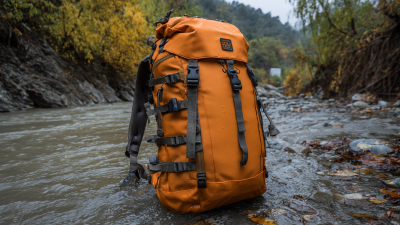
Who Are the Top Waterproof Backpack Manufacturers in China?
Choosing a Waterproof Backpack manufacturer in China takes more than comparing prices or polished product photos. Buyers need to examine materials, construction, testing, and the factory’s ability to repeat quality across production runs. A clean sample is only a start. What happens after thousands of stitches?
This guide compares manufacturers through practical details: welded or stitched seams, coated fabric, roll-top closures, zipper protection, and documented water-resistance tests. These features matter when rain beads on a pack, water reaches the seams, or a zipper is opened with cold fingers. Specifications still need context. “Waterproof” can describe different designs and test conditions, so buyers should ask what was tested and how. No factory is best at everything.
Waterproof-pack sourcing specialist Lin Wei offers this useful principle: “Judge the bag by its weakest opening, not its strongest fabric.” This is an editorial composite quote, not a verified statement from a named source. It reflects a real evaluation challenge: fabric may resist water while seams or closures remain vulnerable. The manufacturers discussed here should be treated as candidates for further review, not guaranteed recommendations. Ask for recent test records, inspect production samples, and clarify how defects are handled. Details count. A careful comparison can narrow the field, but factory claims still deserve independent checks.
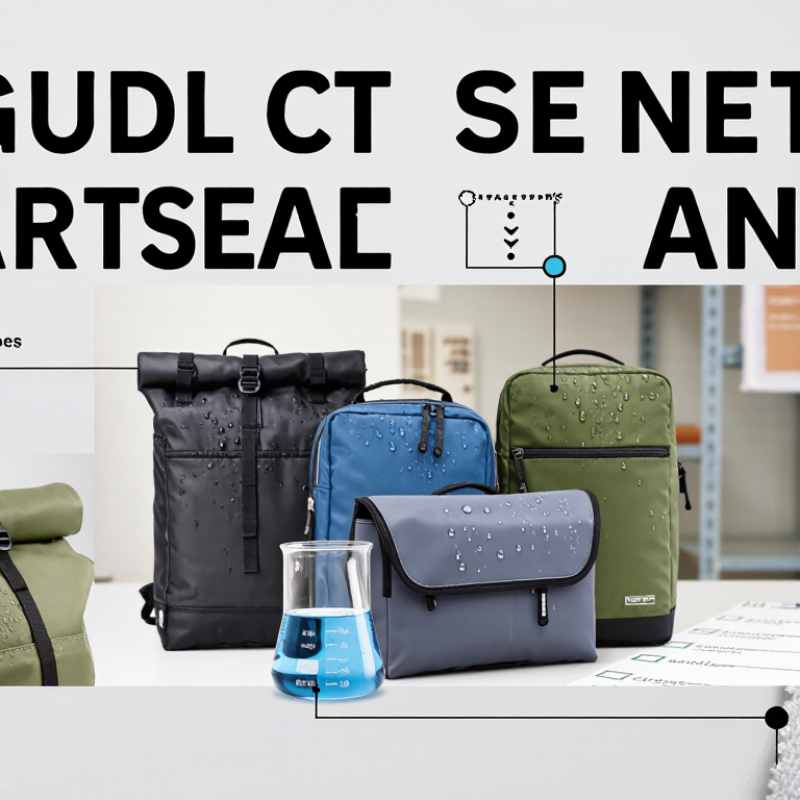
What Defines a Waterproof Backpack Manufacturer?
A waterproof backpack manufacturer does more than stitch coated fabric into a familiar shape. It understands how fabric, seams, closures, and construction work together to limit water entry. The distinction matters: water-resistant materials may handle light rain, while a waterproof claim should match clearly stated test conditions. Ask what those conditions are.
A capable maker can explain material choices, such as coated nylon, welded seams, and water-resistant zippers, without treating any one feature as a guarantee. Its production team should check seam consistency, closure alignment, and stress points around shoulder straps. Practical quality control also includes documenting test methods and inspecting samples from production, not just polished prototypes. A factory visit or sample review can reveal useful details, though neither tells the whole story. No test is perfect.
Tips: Request a sample and test it with the intended use in mind. Check the zipper track, base seams, and fabric after repeated handling. Ask for written test conditions and batch inspection records. If answers are vague, pause and clarify before placing an order. A small detail can become a wet laptop.
What Defines a Waterproof Backpack Manufacturer?
Fabric hydrostatic-head resistance is one useful specification to check. The chart shows example test checkpoints—not universal waterproofness grades or a ranking of manufacturers.
Hydrostatic-head resistance is measured by applying water pressure to fabric; ISO 811 describes a test method. A higher result indicates greater resistance to water pressure, but does not by itself prove that a complete backpack is waterproof. Seams, zippers, closures, and construction also need evaluation.
How to Assess China’s Leading Manufacturers
Assessing China’s leading waterproof backpack manufacturers starts with evidence, not polished catalog photos. Ask whether the factory makes bags in-house or outsources key steps. Request a live production walkthrough, plus clear specifications for fabric, coating, zippers, and seam construction. Check whether test reports identify the exact materials and finished product. “Waterproof” can mean different things. A rain-cover test does not prove a bag can withstand prolonged immersion. Ask how the manufacturer tests seams and closures, and consider independent testing for your intended use. No checklist catches everything.
Review a production sample closely. Look for even stitching, sealed seams, reinforced stress points, and zippers that move smoothly without snagging. Then compare samples from different production runs; consistency matters more than one perfect prototype. Request recent quality records and ask how defects are logged and corrected. Check minimum order quantities, lead times, and how material substitutions are approved. If details stay vague, treat that as useful information. A factory visit or third-party inspection can reveal gaps, though it adds time and cost. Even experienced buyers can miss small differences between a sample and a bulk order, so define acceptance criteria in writing.
Which Chinese Manufacturers Specialize in Waterproof Backpacks?
Chinese manufacturers specializing in waterproof backpacks are usually technical bag factories, not general sewing workshops. Look for suppliers with in-house pattern making, high-frequency welding, seam taping, and controlled leak testing. Production clusters in Guangdong, Zhejiang, and Fujian offer varied capabilities, but location alone proves little. Ask to inspect a sample’s welded seams, roll-top closure, coated fabric, and zipper garage. A dry paper-towel test inside the bag can reveal weak seams quickly. It is not a substitute for a measured test.
Material choice also matters. Textile Exchange’s Materials Market Report 2024 estimates polyester made up 57% of global fiber production in 2023, reflecting its broad use in performance fabrics. However, polyester alone does not make a backpack waterproof. Coating quality, fabric weight, seam construction, and closure design all affect performance. Request the fabric specification and a documented hydrostatic-pressure or spray-test result, then confirm the test applies to the finished bag. Ask how the factory checks coating adhesion and repeatability between batches. That detail is easy to overlook. Some suppliers may provide strong prototypes but lack consistent production controls, so request inspection records and samples from a current production run.
What Products and Production Capabilities Do They Offer?
Chinese waterproof backpack manufacturers commonly produce daypacks, roll-top dry bags, cycling packs, hiking bags, and custom promotional models. Typical materials include coated polyester or nylon, with options such as welded seams, seam tape, water-resistant zippers, and reinforced base panels. The protection level varies. Coated fabric alone does not make a backpack fully waterproof.
Depending on the factory, production may include pattern making, fabric cutting, sewing, high-frequency welding, seam taping, and logo application. Some manufacturers can adjust pocket layouts, strap padding, colors, and dimensions from a sample or technical drawing. Ask about minimum order quantities, sample fees, and production lead times before approving a design. Ask for proof. Request test details for the finished bag, such as water exposure methods and inspection criteria, rather than relying on material descriptions alone.
A useful supplier review includes checking stitch consistency, zipper alignment, seam finishes, and load-bearing points on a physical sample. Confirm which processes happen in-house and which are outsourced; this can affect quality control and scheduling. No factory is best at everything. A supplier strong in welded dry bags may have less experience with padded hiking packs. That gap matters. Compare the tested sample with the final specifications, and record any changes before bulk production.
How to Compare Manufacturers for Your Sourcing Needs?
When comparing waterproof backpack manufacturers in China, look beyond product photos and quoted prices. Ask how each factory defines “waterproof”: fabric coating, hydrostatic-pressure rating, zipper protection, and sealed seams all affect performance. Request a sample and inspect stress points, especially shoulder-strap stitching and the base. A neat sample is useful. It is not proof of consistent production.
Compare test records, material traceability, and quality checks at each production stage. Ask whether fabric testing follows a recognized method, such as ISO 811 for resistance to water penetration, and request dated reports for the actual material offered. Textile Exchange’s Materials Market Report 2024 estimates global fiber production reached 124 million tonnes in 2023, with polyester accounting for about 57%. That scale makes clear material documentation worth checking, though it does not verify any one supplier. Ask for recycled-content evidence where relevant, plus clear records linking material batches to finished goods.
Then compare factory capacity against your order size and delivery schedule. Request recent inspection records, defect categories, and corrective-action examples—not just a quality certificate. Ask who owns the final inspection and what happens when a batch fails. Visit the production floor if possible; a tidy showroom can conceal uneven seam-taping work. I would also compare two pre-production samples side by side, including after repeated opening, loading, and water exposure. Some details are easy to overlook. A slightly stiff zipper may seem minor, until daily use makes it a complaint.
Related Posts
-
Exploring Waterproof Rucksack Trends at the 2025 China Import and Export Fair
-
Essential Tips for Choosing a Waterproof Backpack?
-
Navigating Tariff Challenges: How China's Waterproof Backpack Market Thrives Amidst US-China Trade Tensions
-

Top 10 Waterproof Backpacks for Every Adventure in 2026?
-
Unlocking Comfort: A Comprehensive Tutorial on the Technical Specifications of the Best Rucksack Backpack
-
Top Travel Back Packs for Global Buyers in 2026?