
Why Choose a Flat Bottom Pouch for Packaging?

A package has to do more than hold a product. It must protect contents, run reliably on filling equipment, and look clear on a crowded shelf. A Flat Bottom Pouch can help meet those needs. Its broad base lets it stand upright, while side gussets create room for products such as coffee, snacks, and dry goods. The result is a neat shelf presence, not a guarantee of better sales.

Packaging technologist Walter Soroka’s work emphasizes how packaging must protect products and function through handling and distribution. A fair paraphrase of that principle is: “Good packaging must protect the product and work smoothly from filling to delivery.” That practical lens matters. A pouch may look simple, but film choice, seal strength, zipper placement, and filling speed all affect performance. Small details count.

There are trade-offs. A stand-up format can use more material than a basic pillow pouch, depending on its design. It may also need adjustments to existing filling equipment. Worth checking. Before choosing one, compare product weight, barrier needs, storage conditions, and line compatibility. Ask for samples, then test seals and stability with the actual product. A pouch can stand beautifully on a sample table and still behave differently on a fast production line. That is easy to overlook. A careful evaluation helps determine whether this format fits the product, the process, and the customer’s everyday use.
Why Choose a Flat Bottom Pouch for Packaging?

How Flat-Bottom Pouches Differ from Other Flexible Packaging Formats

Flat-bottom pouches differ from stand-up pouches in how they support themselves. Their flattened base unfolds into a stable, rectangular footprint, while side gussets expand to add volume. The front and back panels stay broad and relatively flat, giving labels and product details more room. A pillow pouch has no comparable base, so it usually lies down unless placed in a display tray.

They can also offer a different balance of shelf presence and storage efficiency. A filled pouch can stand neatly beside cartons or jars, yet empty pouches take up less warehouse space than rigid containers. That advantage depends on the filling line, pouch dimensions, and material structure; changing formats may require equipment adjustments. Barrier performance also varies by film and seal quality, so the shape alone does not protect a product from moisture or oxygen. The broad base can crease or tip if the pouch is poorly filled. Not every design stands perfectly.

Tips: Test filled samples on the actual shelf. Check base width, seal strength, and how the pouch handles after opening. A small trial may reveal awkward tipping that a drawing will miss.

How a Five-Panel Base Creates a Stable, Shelf-Ready Display

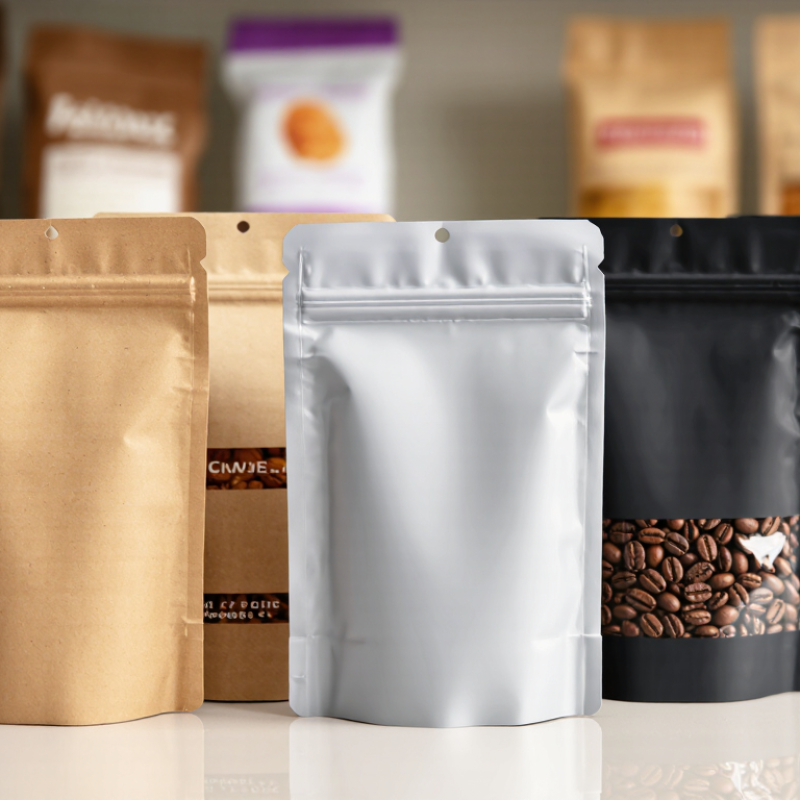
A flat bottom pouch uses five panels: a front, a back, two side gussets, and a broad base. When filled, that base opens into a flat footprint rather than a narrow fold. The pouch can stand upright on a shelf, with its front panel facing shoppers. That matters.

The five-panel shape also helps spread the product’s weight across the bottom. A pouch of coffee, grains, or pet treats is less likely to tip when its contents settle evenly. Side gussets add room without making the display excessively wide. A firm seal and suitable film help the base keep its shape during filling and handling. Small details count: even a slightly uneven fill can make one pouch lean beside a row of upright packs.

In practice, the result is not always as tidy as a product drawing suggests. Lightweight contents may shift, and a poorly formed base can rock on a smooth shelf. Not magic. Test filled samples on the actual display surface, and check them after transport, not just at the packing line. Changes in pouch dimensions, film stiffness, or fill weight can affect how reliably the five-panel base stands.

Why Flexible Packaging Matters: FPA Reports $42.9B in U.S. Sales in 2022

The Flexible Packaging Association (FPA) reported $42.9 billion in U.S. flexible packaging sales in 2022. That figure matters. It shows that flexible packaging plays a substantial role in the market, from food aisles to household goods. But sales figures do not prove that every package type suits every product. Packaging choices still depend on practical needs.

A flat bottom pouch is one option within this larger category. Its broad base can help it stand upright on a shelf, while its front and back panels offer room for product information. Picture a pouch of dry goods standing beside a jar: it can use shelf space differently and may be easier to store before filling. Details such as material layers and closure type affect how well it protects the contents.

Flexible formats can use less material than some rigid alternatives, but comparisons depend on the product and package design. A pouch is not automatically the better choice. This is easy to overlook. Teams should consider barrier needs, filling equipment, transport, and disposal options before selecting a format. The FPA sales figure gives useful market context, not a substitute for testing a specific pouch with the product it will hold.

Why Choose a Flat Bottom Pouch for Packaging?

Flexible packaging generated $42.9 billion in U.S. sales in 2022, reflecting the scale of a packaging format valued for efficient storage, lightweight materials, and shelf appeal.

U.S. flexible packaging sales, in billions of dollars. Source: Flexible Packaging Association, 2022 industry report.

How ASTM F1249 and F1927 Tests Measure Moisture and Oxygen Barriers

Why Choose a Flat Bottom Pouch for Packaging?

A flat bottom pouch stands upright on shelves and offers room for clear product display. Its broad base and side gussets also create several folded areas that packaging teams should inspect. For moisture- or oxygen-sensitive products, the film’s barrier performance matters, but folds and seals can affect real-world protection.

ASTM F1249 measures water vapor transmission through flexible barrier materials using a modulated infrared sensor.

ASTM F1927 measures oxygen transmission with a coulometric sensor under controlled humidity. Both tests produce useful comparisons when temperature, humidity, and test conditions are reported.

Ask for the actual test data, not just a general claim that a pouch is “high barrier.” A film result is not automatically a finished-pouch result. Seals, creases, and handling can change performance.

Tips: Match test conditions to likely storage conditions, and confirm the units before comparing results. Check finished pouches for seal consistency and leaks. Small details matter. A lab result is helpful, but it cannot capture every shipping or storage variable. That limitation deserves attention.

How to Compare Product Protection, Filling Efficiency, and End-of-Life Options

Why Choose a Flat Bottom Pouch for Packaging?

How to Compare Product Protection, Filling Efficiency, and End-of-Life Options

A flat bottom pouch stands upright, with a broad base that helps keep products visible and stable on shelves. Its protection depends on the material layers, seals, and closure—not its shape alone. Match oxygen, moisture, and light barriers to the product’s needs. FAO estimated that 14% of food was lost between harvest and retail globally. Packaging is only one factor among storage, handling, and transport.

A pouch can suit automated filling, but it does not guarantee a faster line. Check pouch dimensions, opening consistency, seal area, and compatibility with your filling equipment. Run a production trial and record fill accuracy, seal failures, and changeover time. Small details matter. A pouch that tips or opens unevenly can slow operators down.

Tips: Ask for the full material structure and local end-of-life guidance before choosing a format. Multilayer barriers may protect well, yet can be difficult to recycle where suitable collection and sorting systems are unavailable. The OECD reported that only 9% of all plastic waste ever generated had been recycled, based on data through 2015. That figure is not specific to pouches. A “recycle-ready” claim is not the same as local recyclability.