
How to Choose the Best Backpack Suitcase in 2026
A Backpack Suitcase promises two useful travel modes in one compact design: rolling convenience across terminals and hands-free carrying on stairs or uneven streets. Yet the right choice depends on more than appearance. A bag that feels light beside a showroom mirror may become awkward when loaded with a laptop, shoes, and a week’s clothes. Small details matter. Wheel clearance, strap padding, zipper access, and handle stability can shape the whole trip.
Travel writer Rick Steves has long championed the advice, “Pack light.” It is simple, but choosing a bag takes more thought. A good Backpack Suitcase should match your real packing habits, body comfort, and typical routes—not an idealized itinerary. Check whether the shoulder straps tuck away cleanly, whether the wheels add noticeable weight, and whether the main compartment opens easily in a crowded room. Compare dimensions with your usual airline’s current guidance, since limits can vary.
This guide explains how to weigh capacity, materials, comfort, organization, and durability in 2026. It also considers who benefits most from a convertible design—and who may prefer a conventional suitcase or travel backpack. A useful reminder: more features do not always mean better travel. Sometimes the extra compartments simply invite extra packing. The best choice may not look impressive on a product page; it should feel balanced on your back and roll smoothly when the pavement turns rough.
What Defines a Backpack Suitcase in 2026
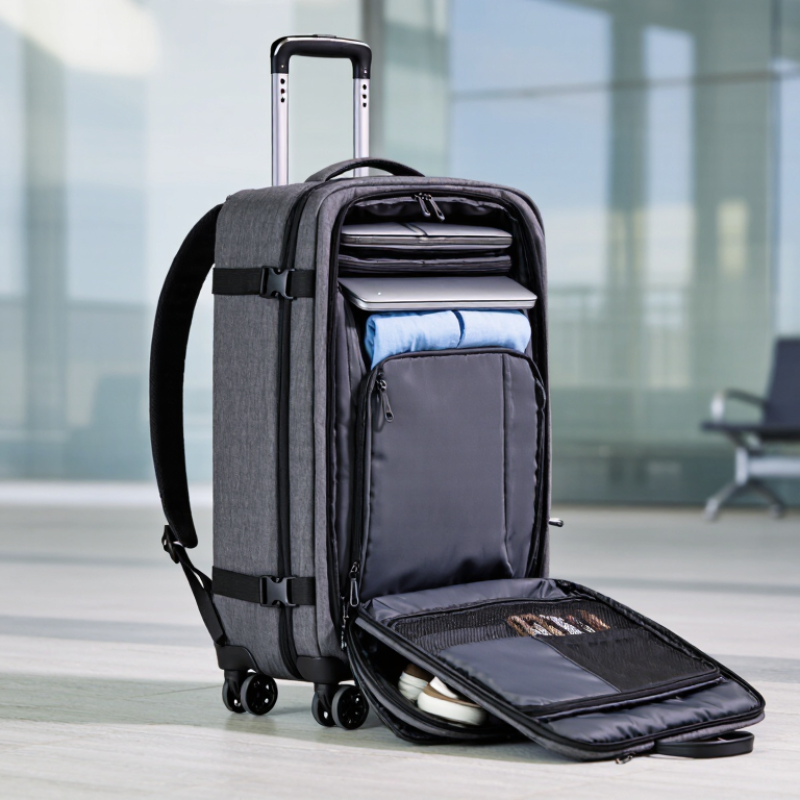
A backpack suitcase in 2026 is a hybrid, not simply a wheeled bag with shoulder straps. It combines a suitcase-style opening and organized compartments with backpack carry, usually through padded, adjustable straps. Many designs also include wheels, a telescoping handle, and a protective sleeve for a laptop. The key is whether these parts work together: straps should tuck away cleanly, and the handle should not steal useful packing space. Small details matter.
IATA reported that global passenger traffic grew 10.4% in 2024 compared with 2023, showing how busy air travel has become. That makes flexible luggage useful, especially when a route includes airport floors, stairs, and crowded train platforms. But there is no universal cabin size; check the carrier’s current limits before buying. A practical test is simple: pack your usual items, lift the bag by its straps, then roll it over a rough surface. Watch for a top-heavy load or wheels that snag. Still, the hybrid has compromises. It may be heavier than a soft backpack and less comfortable than a dedicated hiking pack. I would not ignore that trade-off. A clear capacity, a stable frame, and straps that fit your torso define a genuinely useful backpack suitcase.
How to Match Capacity and Layout to Your Travel Needs
Choose capacity by counting what you will actually carry, not by guessing from trip length. A weekend away may need less room than a two-day trip with bulky shoes or cold-weather layers. For a week of light clothing, a medium-sized bag can work if you plan to wash items. I once packed by volume alone and forgot how much space a pair of shoes could swallow. That was inconvenient. Leave a little room for a jacket or purchases, but avoid filling every corner at home; a fully packed bag is harder to manage on stairs.
Layout matters just as much as capacity. A wide main compartment makes folded clothes easy to see, while compression straps help stop them shifting. Put items you need quickly—such as a water bottle, charger, or travel documents—in pockets you can reach without unpacking. A padded sleeve can protect a laptop, but check its position: a heavy device pressed against your back may make the bag feel awkward. Small pockets are useful only when you remember what you put in them.
Test the bag with your usual load before a trip. Pack shoes, a toiletry pouch, and one full change of clothes, then lift it and walk for a few minutes. Notice whether the handle, wheels, and shoulder straps suit your route. An airport journey is different from several blocks of uneven pavement. Capacity numbers help, but they do not tell the whole story.
How to Compare Wheels, Harnesses, and Carry Options
Wheels, harnesses, and carry options matter most when a bag is fully packed, not when it is empty in a showroom. Four-wheel spinners pivot neatly through smooth terminals, while two-wheel designs often track more steadily over cracked pavement. Check wheel housings for wobble, then pull the case across a rough floor. Small wheels can snag. IATA’s cabin-baggage guidance gives 56 × 45 × 25 cm as a common reference size, but airlines set their own limits. Measure the case with wheels and handles included.
A harness should sit comfortably across your shoulders, with a padded hip belt that transfers some weight away from your back. The American Academy of Pediatrics advises keeping a child’s backpack below 15% of body weight; it is a useful caution, not a universal travel-bag rule. Try the loaded bag for several minutes. That reveals pressure points. A retractable handle is convenient, but it does not replace straps when stairs or crowded aisles block rolling. I still find “comfortable” difficult to judge from specifications alone. Compare how the harness feels with your usual travel load, and check whether straps tuck away before rolling.
How to Choose the Best Backpack Suitcase in 2026
Compare two-wheel, four-wheel spinner, and backpack carry options across common travel situations.
How to read this: Ratings run from 1 (less suitable) to 5 (more suitable) and are practical comparative judgments, not laboratory measurements. Smooth airport floors favor spinner wheels; stairs and hands-free walking favor backpack carry. Check harness fit, packed weight, and airline size limits before choosing.
How to Assess Materials, Durability, and Weather Protection
Choose materials by construction, not by a “rugged” label. Textile Exchange’s Materials Market Report 2024 estimated that global fiber production reached 124 million tonnes in 2023, with polyester making up 57 percent. That figure describes supply, not suitcase quality. Check fabric density, coating, stitching, and how the bag’s base is reinforced. Feel the seams. A thin shell can still perform well, but only if its stress points are properly built.
For abrasion, ask whether the fabric was tested using the Martindale method in ISO 12947-2:2016, and request the result and test conditions. A number without context can mislead. For water resistance, ISO 811:2018 describes a hydrostatic-pressure test for fabrics; it does not certify an entire backpack suitcase as waterproof. Inspect zipper covers, seam taping, and the fabric around wheel housings. Try a simple check: mist the exterior, then look for damp patches inside. This won’t replace lab testing, and I might miss a weak spot, but it can reveal obvious gaps before a rainy commute.
How to Check Size, Security, and Overall Value
Measure the bag when fully packed, not while it is empty. Include wheels, handles, and any bulging front pocket. A soft-sided backpack suitcase can compress slightly, but do not assume it will fit every cabin-size limit. Check your airline’s current measurements before traveling. Sizes vary. At home, pack your usual shoes and clothing, then lift the bag by its top handle and shoulder straps. If it feels awkward in a hallway, it will probably feel worse in a crowded station.
Security starts with sturdy zippers, tidy seams, and pockets that sit close to your body. Look for zipper pulls that can be secured together, and check whether the main compartment opens wide enough for inspection. A lock may deter casual access, but it cannot make a bag theft-proof. Keep valuables in an inner pocket, and avoid leaving loose straps hanging where they can snag. Small details matter.
Judge value by how the bag works after packing. Test the wheels over a rough floor, extend the handle fully, and check whether shoulder straps tuck away cleanly. Feel the stitching where straps meet the body; that area carries real strain. A lower price can be reasonable if the bag suits light, occasional trips. For frequent travel, repairs, replacement parts, and warranty terms deserve a closer look. I would not overrate extra compartments; they can add weight and make packing fussier. Even a well-designed bag has trade-offs.
Related Posts
-
Unveiling the Tactical Backpack Trends at the 137th Canton Fair in Guangzhou
-
Unlocking Comfort: A Comprehensive Tutorial on the Technical Specifications of the Best Rucksack Backpack
-
How to Choose the Perfect Luxury Backpacks for Your Needs?
-
How to Choose the Best Backpack Luggage for Travel?
-
What is a Tactical Backpack and Why You Need One?
-
Global Leading Manufacturer Unveils Best Backpack Suitcase for International Markets