Who Are the Top Bag Manufacturers for Global Buyers?

Choosing a Bag Manufacturer for international supply is rarely about finding one famous name. Buyers need a partner that can meet product, quality, and delivery requirements consistently. A useful comparison looks beyond a polished catalog. It considers materials, construction, production capacity, communication, and experience with similar orders.

Small details reveal a lot. Ask how samples are approved, how changes are documented, and how defects are handled. A clear answer is more valuable than a broad promise. Buyers should also compare stitching, zippers, lining, print quality, and packaging against their specifications. These checks help distinguish a capable factory from a supplier whose strengths may not fit the project.

There is no universal “top” manufacturer for every buyer. A startup ordering a few hundred canvas totes may need flexibility, while a retailer planning seasonal luggage orders may prioritize scale and repeatability. Request references where available, review samples, and confirm timelines in writing. Then compare the full cost, not just the quoted unit price. Freight, packaging, sampling, and revision delays can change the calculation. Even careful research has limits. Samples cannot prove every production run will match, and a factory’s capacity can shift. The aim is not certainty, but a better-informed decision. This guide explores what global buyers can assess when comparing bag manufacturers and choosing a partner suited to their products, budgets, and expectations.
Who Are the Top Bag Manufacturers for Global Buyers?

How Global Buyers Assess Leading Bag Manufacturers

Global buyers assess bag manufacturers through more than unit price. They compare sample consistency, stitching density, edge finishing, material specifications, and production capacity. Ask for a pre-production sample and inspect stress points such as handles, zippers, and reinforced corners. Small defects matter. A polished showroom sample is not proof that every carton will match it.

Delivery capability deserves equal scrutiny. The World Bank’s 2023 Logistics Performance Index compares 139 economies across six areas, including customs, infrastructure, shipment tracking, and timeliness. It measures national logistics, not an individual factory, so buyers should also check actual dispatch records and backup plans. UNCTAD’s Review of Maritime Transport 2024 reports that global maritime trade grew 2.4% in 2023. With shipping routes exposed to disruption, a credible manufacturer should explain realistic lead times and how delays are communicated.

For responsible sourcing, request material declarations, subcontractor lists, and recent audit records, then verify that the documents match the production site. Paperwork matters too. Buyers should test how a supplier handles a failed inspection: Do they identify the cause, agree on corrective action, and document the next check? I would not treat a high audit score as a guarantee. A missing detail in the factory’s traceability process can be more revealing than a polished presentation.

Where Major Bag Manufacturing Hubs Are Located

Major bag-making hubs often cluster near textile mills, skilled sewing labor, and shipping ports. In China, Guangdong, Zhejiang, and Fujian support broad production networks, from cut-and-sew workshops to larger factories. Buyers may find varied materials and production capacity in one region. The map is not tidy.

Vietnam has growing manufacturing centers around Ho Chi Minh City and the northern industrial belt. India’s hubs include areas around Delhi, Mumbai, and Chennai, where factories work with leather, canvas, and synthetic fabrics. Bangladesh is known for its garment industry, and some suppliers also produce fabric bags. Turkey connects production with nearby European markets, while Italy has specialist workshops focused on design and finishing. Each hub differs.

Location alone does not guarantee reliable quality. A factory near a port may offer convenient shipping, but its sample quality, labor capacity, and material sourcing still need checking. Ask for production samples, written specifications, and clear lead-time estimates. Visit when practical, or arrange an independent inspection. Small workshops can be skilled, yet deadlines may slip when orders grow. That matters. A sourcing decision should match the bag type, order size, and buyer’s tolerance for delays—not just the nearest manufacturing map.

Who Are the Top Bag Manufacturers for Global Buyers? - Where Major Bag Manufacturing Hubs Are Located

Country or area Major manufacturing hubs Common bag categories Typical materials and capabilities Sourcing considerations for buyers
China Guangdong (Guangzhou, Shenzhen, Dongguan); Zhejiang (Yiwu, Wenzhou); Fujian (Quanzhou) Handbags, backpacks, luggage, travel bags, business bags, promotional bags Broad production base covering synthetic leather, textiles, nylon, polyester, canvas, and leather goods; extensive component and packaging supply chains Suitable for a wide range of order sizes and product types. Confirm factory capabilities, material specifications, quality controls, and shipping terms for each order.
India Kanpur, Kolkata, Mumbai, and parts of Tamil Nadu Leather bags, fashion accessories, canvas bags, cotton bags, and travel goods Leather processing and stitching expertise in established centers; cotton, jute, and other textile-based products are also made in multiple regions Product specialization varies by city and supplier. Check leather sourcing documentation, workmanship standards, and the supplier’s experience with export requirements.
Vietnam Ho Chi Minh City and surrounding southern industrial provinces, including Binh Duong and Dong Nai Backpacks, sports bags, travel bags, and sewn textile bags Strong sewn-goods manufacturing base using synthetic fabrics, nylon, polyester, and related components Often considered for export-oriented production. Verify available capacity, subcontracting arrangements, lead times, and compliance requirements.
Bangladesh Dhaka and nearby industrial areas Backpacks, school bags, promotional bags, and other textile-based bags Garment-sector sewing skills and textile production support bag manufacturing, particularly for fabric-based products Confirm experience with bag-specific construction, such as reinforced seams, zippers, straps, and load-bearing tests, rather than relying only on apparel experience.
Indonesia Greater Jakarta, Bandung, and other West Java production areas Backpacks, casual bags, travel goods, and textile accessories Textile and sewn-product manufacturing using synthetic fabrics, canvas, and other common bag materials Assess factory capacity and component availability for the intended design. Confirm sample approval and production timelines before placing larger orders.
Italy Tuscany and Marche, including leather-goods production districts Leather handbags, small leather goods, and higher-end fashion accessories Specialized leather cutting, construction, finishing, and product development capabilities Often associated with higher-cost, design-focused production. Clarify material origin, workmanship specifications, minimum quantities, and traceability documentation.
Turkey Istanbul and other Marmara-region production areas Leather handbags, fashion bags, travel goods, and textile bags Access to leather, textiles, and accessory suppliers, alongside experience in fashion-oriented manufacturing Geographic proximity can be useful for buyers serving European markets. Compare freight options and verify product testing and quality-control procedures.
Pakistan Sialkot and Karachi Sports bags, equipment bags, backpacks, and leather goods Sialkot is known for sporting-goods manufacturing; related sewn products include bags made for sports and equipment use For technical or sports bags, specify material strength, stitching, hardware, and performance tests. Check that samples match the final production specification.
Portugal Northern Portugal, particularly the Porto and Braga areas Leather handbags, fashion accessories, and textile bags Small and mid-sized workshops support leather and fashion-goods production, including product development and finishing May suit buyers seeking European production and closer communication with suppliers. Confirm production capacity, minimum order quantities, and delivery schedules.
United States Manufacturing is distributed across several states rather than concentrated in one dominant bag-making hub Specialty backpacks, work bags, technical bags, and small-batch products Domestic production commonly serves specialized, technical, or limited-run needs, with capabilities varying substantially by manufacturer Assess domestic labor and material costs against lead-time, communication, and supply-chain requirements. Request a detailed production breakdown before comparing quotations.

Note: These locations are manufacturing clusters, not a ranked list of individual manufacturers. Capabilities, order sizes, materials, and export experience vary by factory; buyers should verify each supplier independently.

Which Manufacturers Serve International Buyers

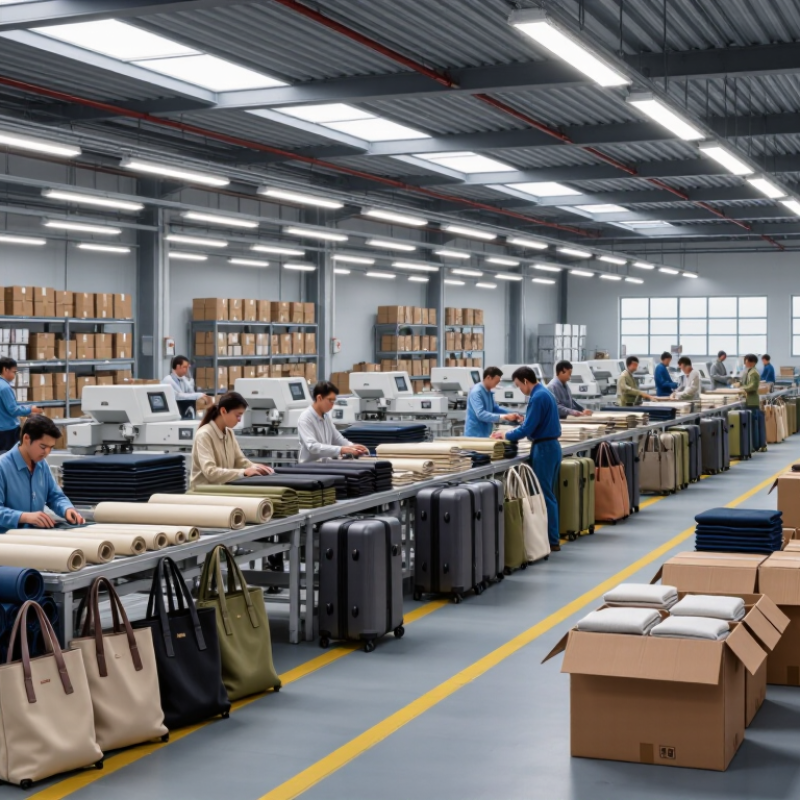
International buyers are usually served by export-oriented bag manufacturers with experience in repeat production, sampling, and overseas shipping. Some operate their own cutting and sewing floors; others coordinate a network of specialist workshops. The distinction matters when an order needs consistent stitching across thousands of units. Ask who controls quality checks, not just who sends the quotation. That detail counts.

Manufacturers serving international clients may offer original design production, custom specifications, or ready-made styles with limited adjustments. Their capabilities vary by material, construction, and order size, so a factory suited to lightweight promotional totes may not be right for structured travel bags. Request a physical sample and inspect the seams, lining, zippers, and handle attachment under ordinary use. Small flaws show.

A reliable supplier should explain lead times, minimum quantities, packaging options, and the export documents it can provide. Buyers can also ask for recent inspection records and a clear process for handling defects. A polished catalog is useful, but it does not prove that the production floor matches the pictures. I would treat vague answers as a reason to ask more questions, not as proof of poor work. Even careful checks cannot remove every risk, but they make supplier comparisons more grounded.

What Products and Production Capabilities They Offer

Who Are the Top Bag Manufacturers for Global Buyers?

Global bag manufacturers may produce tote bags, backpacks, travel bags, cosmetic cases, and reusable shopping bags. Their capabilities vary by material and construction. Some specialize in lightweight polyester, while others work with canvas, coated fabrics, or recycled fibers. Production may include cutting, printing, sewing, binding, and installing zippers or straps. Ask which steps happen in-house; this can affect quality control and lead times.

A capable supplier can turn a sketch into a sample, then adjust dimensions, pocket placement, stitching, and hardware. For larger orders, buyers should discuss monthly capacity, minimum order quantities, inspection procedures, and packaging options. Request specific details, such as seam-strength checks or color consistency standards. A neat sample is useful, but it does not guarantee every unit will match. That gap deserves attention. Confirm how defects are recorded and resolved before production begins.

Tips: Send a clear specification sheet with measurements, fabric weight, color references, and intended use. Approve a production sample, not just a concept drawing. Keep a little flexibility; real materials can behave differently than expected.

How to Compare Suppliers on Quality, Cost, and Compliance

A dependable bag manufacturer should be compared through samples, documented processes, and clear communication—not price alone. Ask each supplier to make a sample with the proposed fabric, lining, stitching, and hardware. Inspect the seams under gentle tension, test the zipper repeatedly, and compare dimensions with a written specification. Small details matter. A handle that twists under load may look fine on a desk. Request relevant material or performance test reports, and check who issued them. Vague records are a gap worth investigating, not automatic proof of poor quality.

Compare itemized quotes for materials, tooling, packaging, inspection, and shipping. A low unit price can hide costs that appear later. Ask how production defects are recorded, how replacements are handled, and whether delivery dates include time for rework. Compliance needs vary by destination market and product type. Request current factory and material documents, then verify their scope and validity with the issuing organization where possible. An independent inspection can help confirm that bulk goods match the approved sample. No checklist catches everything. Supplier comparisons can still feel imperfect, so record assumptions and revisit them before placing a large order.

Selected Chemical Compliance Benchmarks for Bag Buyers

Compare suppliers by checking whether their test reports address the requirements that apply to your product and destination market.

These figures are regulatory benchmarks, not supplier scores or universal limits for every bag. The EU REACH 0.1% SVHC threshold triggers communication duties; U.S. CPSIA limits shown apply to specified children’s products and components. Confirm product scope, test methods, and current requirements for each market. Sources: EU REACH, Article 33; U.S. CPSC lead guidance; U.S. CPSC phthalates guidance.